Time to rewire? Go Back
Author: Marisan Hallett Date: 23 June 2022
Was your home built before the 1990s – if so, you might need to rewire your home. The guideline suggests replacing your wiring every 25 years as wiring can deteriorate over time. Old cabling or faulty wiring can be a serious fire hazard. Rewiring will involve removing the old wiring and installing new wiring that meets the standard of today eliminating risks and making everything new, modern, and most importantly, safe.
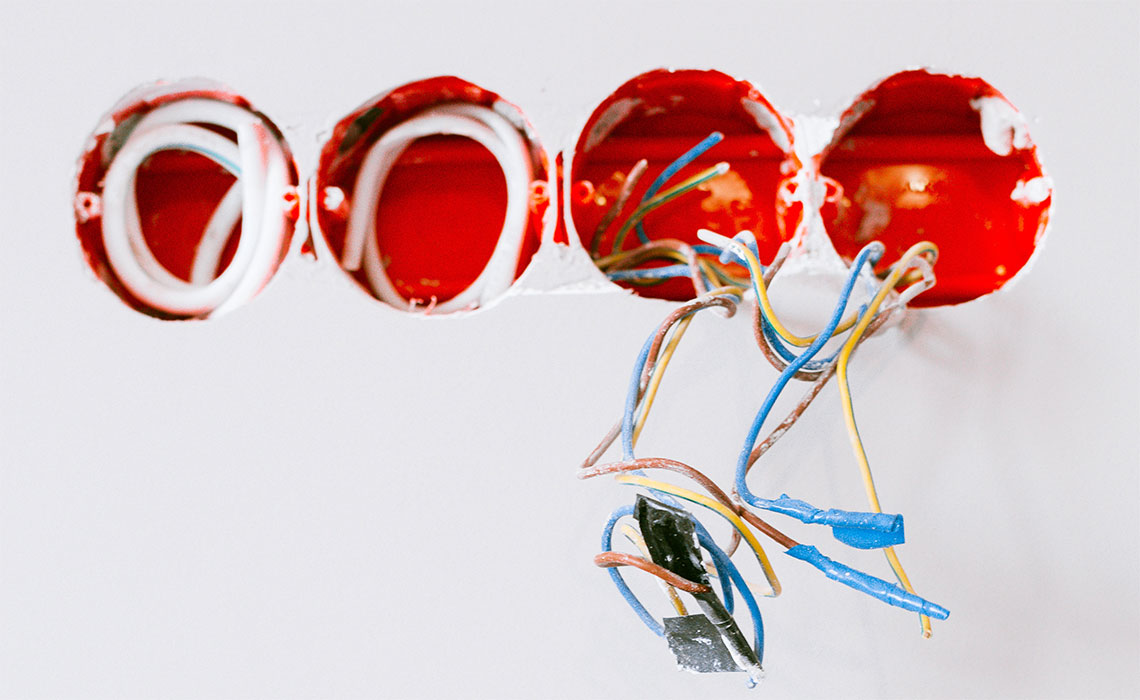
Rewiring is no DIY job and should be done by a certified electrician. Ask around for references and get multiple quotes from different contractors. Go over all the work that will be done and make sure that everything is clear. You don’t want to budget and later be surprised with extra costs.
Rewiring is messy, noisy, and tedious. There will be hammering, pounding and tons of drilling along with power outages, usually at the most inconvenient times. Your home will become a small construction zone.
All the old wiring will be stripped out of the walls and under the floorboards meaning open areas and a lot of dirt. Not a safe place for small children for sure. Plan ahead for the work to be done. New wiring will be fitted underneath the floor and inside the walls and a new circuit breaker will likely be installed to handle the new load of the system. The Code of Practice for the Wiring of Premises or SANS 10142-1 is the mandatory safety standard for electrical installation regulations as listed in the Occupational Health and Safety act.
Rewiring is done in two stages:
The first stage includes replacing cabling, wiring circuits, and mounting boxes. The wiring for the lighting, both internal and external, will also be done in the first stage.
During the second stage all sockets and light switches will be fitted with face plates and light fixtures will be installed. Everything will be connected to the distribution board, and your electricity will be 'live'.
Warning signs your home needs rewiring:
When you start noticing sparking outlets or a faint smell of burning and worse, when you get a small electrical shock when touching a cord, you should get your rewiring plan together and start the process immediately. These are clear signs that something in your wiring is faulty and poses a fire risk that cannot go unattended. Other signs include:
-
Out of date plugs or broken and discolored sockets.
Discolored outlets indicate a loose connection that causes sparking resulting in the outlet getting burnt causing the discoloration. Always use SABS-approved plugs. -
Breakers that trip repeatedly.
The circuit breaker tripping in itself is a good sign. Breakers will trip when the electrical flow exceeds the number of amps that the breakers are designed to handle. -
Constant flickering or dimming lights.
This is an indication of too much and too little voltage causing a spike or decline in power. Lightbulbs can burn out in their sockets due to this fluctuation and is an even bigger sign that it is time to rewire. -
Fluctuation in power.
This can be caused by overloaded sockets, loose wiring or the conductor giving power to your home is inadequate. -
Regularly blown fuses.
This may be because of outdated fuses that cannot take the weight of electricity. Porcelain fuses should be replaced.
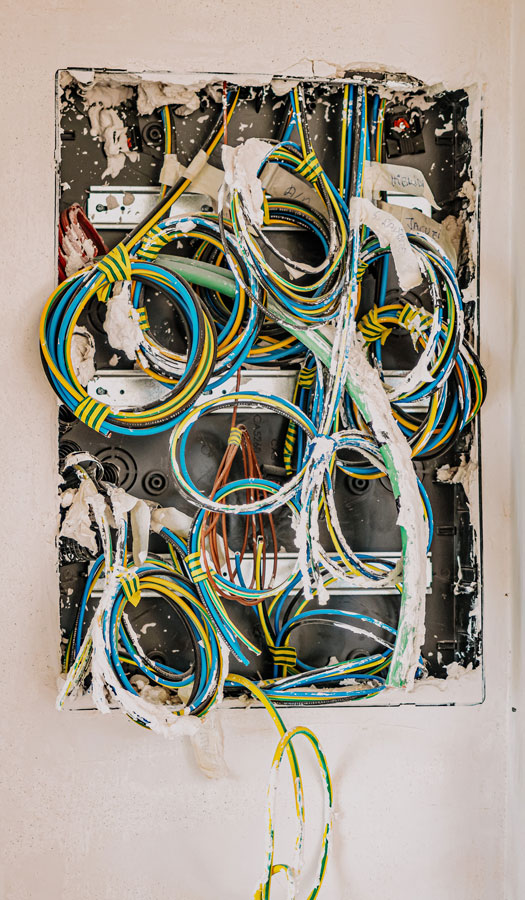
Daunting as it may seem, rewiring your home may be necessary. The inconvenience will last a short while as opposed to the threatening consequences of old wiring. Planning ahead is key and patience is a virtue.