Get it clear Go Back
Author: Marisan Hallett Date: 06 December 2022
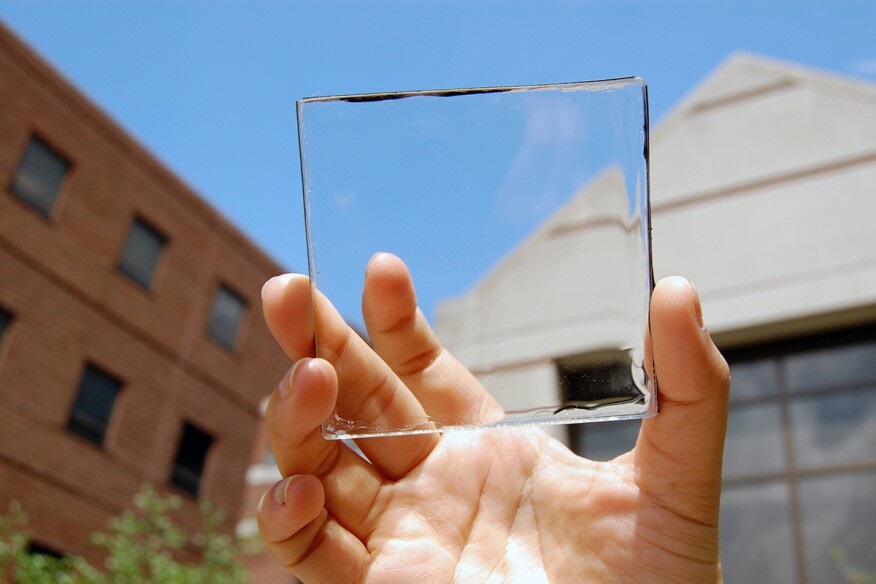
Richard Lunt / Courtesy Michigan State University
The world is striving towards a greener future and innovative technologies are constantly researched and developed. One such development is the transparent solar panel which holds enormous potential for the future of clean energy, while sustaining our landscapes and natural habitats.
The first transparent solar panel was created in 2014 by a team of researchers, led by Richard Lunt, at the Michigan State University and in 2020 further research and development achieved full transparency for solar glass. These transparent solar panels can easily be used in a range of settings and applications. We might even see self-charging phones and devices in the near future. Ongoing research will result in different developments and technologies all aiming towards one goal – a green future.
How does Transparent Solar Panels work?
Where solar photovoltaics (PV) absorb sunlight (photons), and then convert it into energy (electrons), the transparent cell, also called photovoltaic glass, uses light energy through the glass surface to generate electricity. Richard Lunt and his team developed the Transparent Luminescent Solar Extractor (TLSC) which contains organic salts. By using the TLSC, the cell harnesses a portion of the light spectrum invisible to the naked eye – the UV and Infrared wavelengths. The salts absorb these wavelengths and create a luminescent glow through a visible wavelength. This wavelength then moves to the edges of the glass frame which consists of thin PV solar cell strips, converting it into electricity.
The pioneers in transparent solar research and manufacturing:
Ubiquitous Energy is developing their unique ClearView Power technology – a transparent coating that can be directly applied onto glass windows during the normal glass-making process.
The European manufacturer, Physee developed their PowerWindow, which is currently the only transparent solar panel installed in the world covering 300sq.ft. of the Dutch banking buildings. The PowerWindow can still not be the stand-alone power source for buildings, but with the constant developments in technology and rapid improvements, Physee is confident that this is the future.
Created by Heliatek GmbH in Germany, the partially transparent panels absorb 60% of sunlight received, with 40% transmitted through the panel. The efficiency of these panels is 7.2% whereas conventional photovoltaic panels are 12%. The partially transparent panels show how adjusting the balance between transmitted and absorbed sunlight affects solar energy production which will be beneficial to buildings with large south-facing surface areas.
Solarwatt in Germany manufactured panels that are sustainable over the manufacturing and the life cycle of the panels – from material procurement to recycling. The strive of Solarwatt is to create a product that does not only deliver clean energy but that is also manufactured and produced sustainably. For this technology they obtained the “Cradle-to-Cradle” certification – a globally recognized holistic product standard by the independent Cradle-to-Cradle Products Innovation Institute. They achieved gold certification in the Energy Management & CO2 Emissions-, and the Water Management categories.
It may seem like the far-off future but new innovations and technologies along with the rapid advancements we are experiencing right now, are opening the future to new possibilities, which will bring us closer to a sustainable future not reliant on the grid of the fossil fuel industry.
With the transparent solar panels, we will soon be able to turn solar farms into solar cities.